Retro Sunday Font: Nostalgic Display Type for Crafters
As makers and small business owners, we know that typography is often the difference between a product that looks homemade and one that looks professionally curated. Finding the right display font can feel like searching for a needle in a haystack, especially when you need something that balances vintage charm with modern legibility. Retro Sunday is a playfully nostalgic typeface that delivers exactly this balance. Masterfully designed to become a staple in your creative toolkit, this font brings an incredible display quality that translates beautifully from screen to physical substrate. Whether you are designing candle labels, wedding stationery, or digital planner stickers, Retro Sunday offers that special retro touch without sacrificing the readability your customers need.
Capturing Vintage Charm for Modern Products
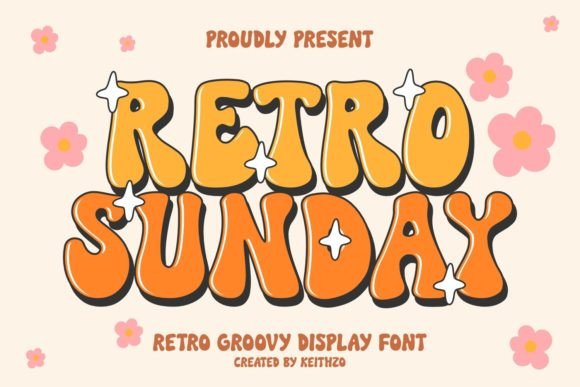
The visual personality of Retro Sunday sits comfortably at the intersection of mid-century modern and contemporary farmhouse aesthetics. It avoids the overly distressed look that can make text difficult to read on small items, opting instead for clean lines with subtle nostalgic curves. For crafters creating physical goods, this distinction matters immensely. When you are selling handmade soaps, boutique clothing tags, or artisanal food packaging, the font needs to convey warmth and history while remaining crisp enough to scan quickly on a store shelf.
This typeface excels in establishing brand identity for sellers who want their products to feel timeless rather than trendy. The letterforms have enough weight to hold ink well during printing and enough structure to cut cleanly on vinyl machines. Unlike thinner novelty fonts that might bridge or tear during weeding, Retro Sunday provides a solid foundation for merchandise. Its playful yet grounded nature makes it versatile enough for a wide range of niches, from boho nursery decor to retro diner-style signage.
Practical Applications for Handmade Sellers
Versatility is key when investing in premium fonts for a commercial craft business. You need assets that work across multiple product lines to maintain consistency. Retro Sunday shines in several specific applications where display fonts typically struggle:
- Product Packaging and Labels: Use this font for primary product names on jar labels, box sleeves, and tissue paper stamps. The boldness ensures the product name pops against colored backgrounds or textured paper.
- Wedding and Event Stationery: Perfect for welcome signs, seating charts, and menu headers. It pairs the romance of a script with the stability of a serif, making it readable for guests from a distance.
- Digital Downloads and Printables: Ideal for wall art quotes, daily affirmation cards, and planner covers. The high-resolution rendering ensures your digital files look sharp when customers print them at home.
- Apparel and Tote Bags: Works exceptionally well for heat transfer vinyl (HTV) and screen printing. The sturdy strokes prevent cracking over time and ensure the design remains vibrant after washing.
- Social Media Graphics: Create cohesive Instagram templates or Pinterest pins. The retro vibe stops the scroll, while the clear lettering communicates your message instantly on mobile screens.
Readability and Production Considerations
A beautiful font is useless if it fails during production. When using Retro Sunday for cutting machines like Cricut or Silhouette, pay attention to the size and spacing. While this display font is robust, extremely small sizes (under 0.5 inches) may require adjusting the blade pressure or using a finer point blade to preserve the integrity of the inner counters. For sticker makers, this font is forgiving; the smooth curves reduce the risk of peeling corners compared to jagged grunge fonts.
For printed materials, always test your output. Retro Sunday has excellent x-heights, which aids readability even when scaled down for business cards or return address labels. However, because it is a display font, avoid using it for long paragraphs of body text. Reserve it for titles, names, short phrases, and decorative accents. Let a simple sans serif or a clean serif handle the fine print. This hierarchy not only improves the customer experience but also elevates the perceived quality of your work. When a label is easy to read, customers subconsciously trust the product inside.
Font Pairing Strategies for Professional Design
To maximize the impact of Retro Sunday, pair it intentionally with complementary typefaces. Effective font pairing creates visual interest and guides the viewer’s eye through your design. Here are three reliable combinations for craft projects:
- Retro Sunday + Minimalist Sans Serif: This is the safest bet for product labels. Use Retro Sunday for the product name (e.g., "Lavender Honey") and a light-weight sans serif for the details (e.g., "Net Wt. 8oz"). The contrast highlights the vintage title while keeping functional information accessible.
- Retro Sunday + Delicate Script: Best for wedding invitations and greeting cards. Place a flowing handwritten font above or below Retro Sunday to add softness. Ensure the script does not compete for attention; let Retro Sunday anchor the composition.
- Retro Sunday + Classic Serif: Ideal for sophisticated branding and luxury packaging. A traditional serif font adds an air of establishment and trust, grounding the playfulness of the display font. This combination works well for coffee shops, bookstores, and heritage-style goods.
Maximizing Value with Alternates and Ligatures
Before finalizing your designs, explore the full character set included with Retro Sunday. Many premium display fonts include OpenType features that can transform a standard layout into something custom. Check for alternate characters that might better fit a specific space or ligatures that connect common letter pairs smoothly. These small typographic nuances prevent awkward gaps and create a more fluid, hand-lettered appearance.
Additionally, verify multilingual support if you sell to international customers or create bilingual packaging. Having access to accented characters within the same font family ensures your design remains consistent across languages without resorting to mismatched fallback fonts. Reviewing the file formats is also essential; ensure you have OTF or TTF files for desktop design software and SVG or PNG versions for web-based platforms or direct cutting machine use.
Navigating Commercial Licensing for Makers
Understanding licensing is as important as understanding kerning. Before listing any product featuring Retro Sunday, confirm the specific license terms provided by the type designer. Most personal licenses do not cover commercial sales. If you are selling physical items like mugs, shirts, or signs, you typically need a commercial desktop license. For selling digital templates, editable Canva links, or SVG cut files, an extended or template-specific license is usually required.
Respecting these terms protects your business from legal issues and supports the independent type designers who create these valuable assets. Keep your license receipts organized in your business records. When clients ask about the fonts used in your custom branding packages, being able to confidently explain the licensing demonstrates professionalism and integrity. Ultimately, Retro Sunday is an investment in your brand's visual language. By using it correctly, legally, and creatively, you turn a simple typeface into a powerful tool for connecting with customers and growing your handmade business.